I’ll admit, I used to think casseroles were all about cream-of-whatever soup and cheese. Lots of cheese. So when I decided to go vegan a few years back, I figured casseroles were off the table for good.
Turns out I was wrong. This vegan asparagus casserole proved that you don’t need dairy to make something creamy and comforting. The secret? A simple mixture of soymilk, flour, and nutritional yeast creates that classic casserole sauce we all love. Add in fresh asparagus, mushrooms, and crispy hash brown topping, and you’ve got a dish that even my non-vegan friends ask me to bring to potlucks.
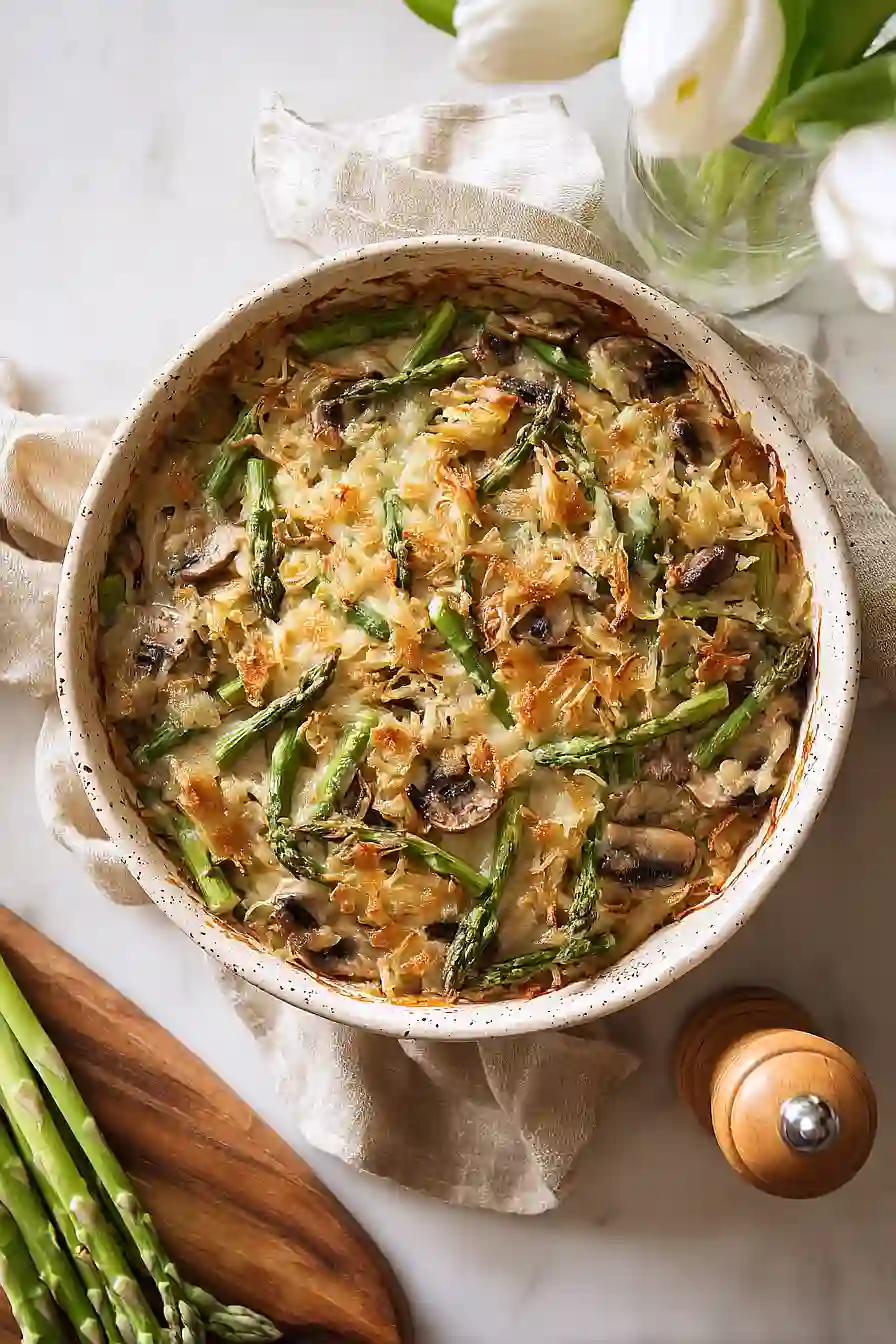
Why You’ll Love This Vegan Asparagus Casserole
- Plant-based and healthy – This casserole is packed with fresh vegetables and protein-rich chickpeas, making it a nutritious option that’s naturally vegan and dairy-free.
- Creamy without the cream – The combination of non-dairy milk and nutritional yeast creates a rich, satisfying sauce that tastes indulgent without any dairy products.
- One-dish meal – With vegetables, protein, and potatoes all baked together, you get a complete dinner in a single pan with minimal cleanup.
- Budget-friendly ingredients – This recipe uses affordable staples like chickpeas, frozen hash browns, and seasonal vegetables that won’t break the bank.
- Great for meal prep – This casserole reheats beautifully, making it perfect for preparing ahead and enjoying throughout the week.
What Kind of Asparagus Should I Use?
Fresh asparagus is really the way to go for this casserole, and you’ll want to look for stalks that are firm with tight, closed tips. Thinner asparagus spears tend to be more tender and cook faster, while thicker ones have a meatier texture – either will work great here. When you’re at the store, give the bunch a little squeeze to make sure the stalks aren’t limp or slimy, which means they’re past their prime. Before using your asparagus, just snap or cut off the woody ends at the bottom – they’ll naturally break where the tender part begins if you bend them gently.

Options for Substitutions
This casserole is pretty forgiving when it comes to swapping ingredients:
- Asparagus: Green beans or broccoli florets make great substitutes if asparagus isn’t in season. Cut them to similar sizes so they cook evenly.
- Soymilk: Any unsweetened non-dairy milk works here – almond, oat, or cashew milk are all good options. Just stick with unsweetened varieties to keep the savory flavor intact.
- Chickpeas: White beans like cannellini or great northern beans are perfect swaps. You could also use lentils, though you’ll need to cook them first before adding to the casserole.
- Mushrooms: Any mushroom variety works – button, cremini, or shiitake all bring good flavor. If you’re not a mushroom fan, you can leave them out or add extra celery instead.
- Nutritional yeast: This adds a cheesy flavor, but if you don’t have it, you can skip it or add a tablespoon of miso paste for extra umami depth.
- Hash brown potatoes: Fresh shredded potatoes work great – just squeeze out excess moisture before using. You can also use diced regular potatoes, though the texture will be slightly different.
Watch Out for These Mistakes While Baking
The biggest mistake with this casserole is adding watery vegetables without cooking off excess moisture first – make sure to sauté your mushrooms and asparagus long enough so they release their liquid and it evaporates, otherwise you’ll end up with a watery casserole instead of a creamy one.
Another common error is not whisking the flour thoroughly into the broth before adding it to the pan, which can create lumps in your sauce – take an extra minute to mix it until completely smooth for the best texture.
Don’t skip the step of letting the mixture simmer for the full 5 minutes after adding the chickpeas, as this time allows the sauce to thicken properly and coat everything evenly.
Finally, if your hash brown topping isn’t browning after the initial bake time, a quick 2-3 minutes under the broiler works wonders, but watch it closely since it can go from golden to burnt in seconds.
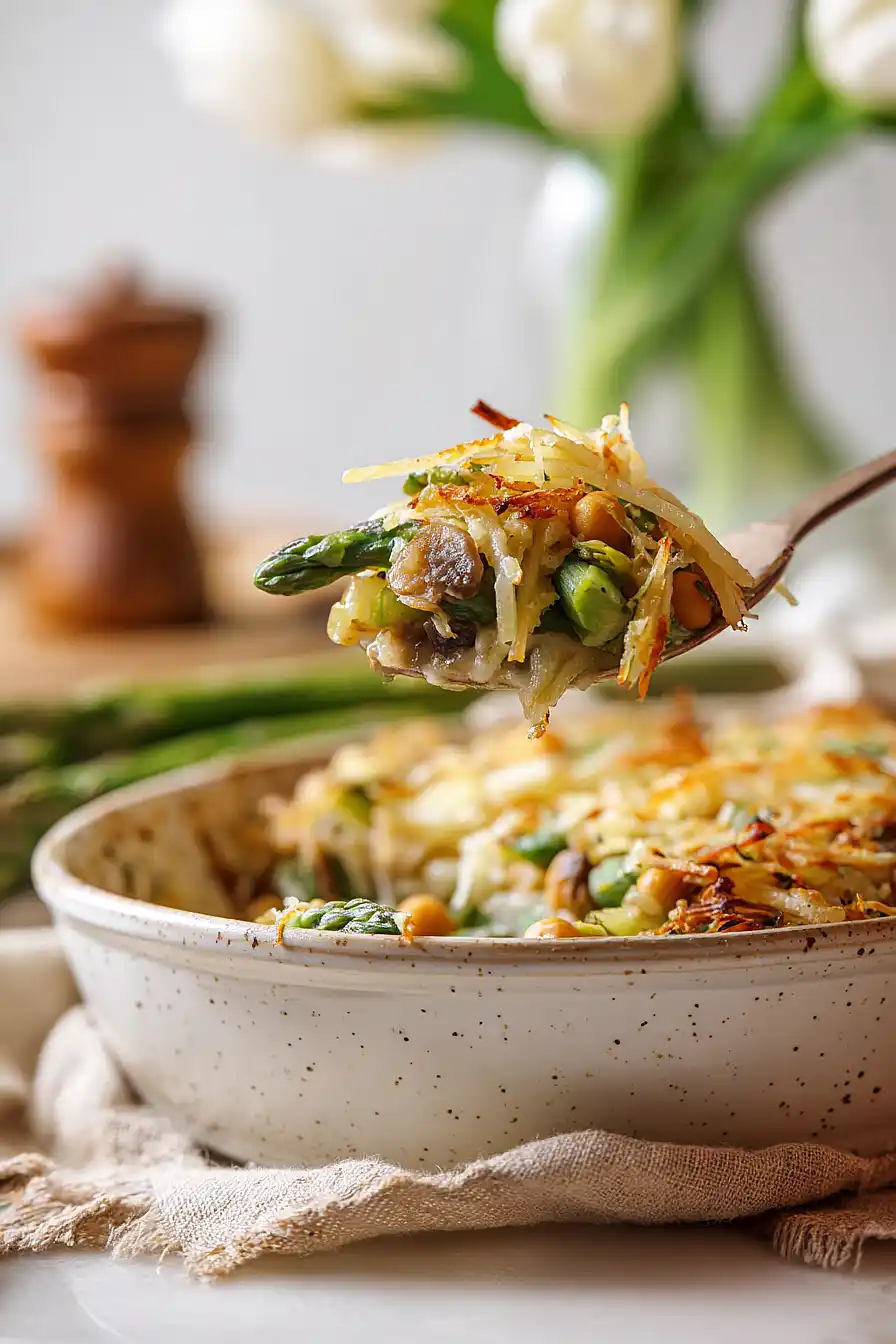
What to Serve With Asparagus Casserole?
This asparagus casserole is pretty hearty on its own with the chickpeas and potatoes, but I love serving it alongside a simple mixed greens salad with a lemon vinaigrette to balance out the richness. A slice of warm, crusty bread is perfect for scooping up any of the creamy sauce left in your bowl. If you’re feeding a crowd, you could add some roasted Brussels sprouts or green beans on the side to keep the veggie theme going. For a complete meal, I sometimes serve it with a grain like quinoa or brown rice, though honestly, the casserole is filling enough that you might not even need it.
Storage Instructions
Store: This casserole keeps really well in the fridge for up to 4 days in an airtight container. The flavors actually get even better the next day as everything has time to meld together, so it’s great for meal prep or making ahead for busy weeknights.
Freeze: You can freeze this casserole for up to 3 months, either before or after baking. If freezing unbaked, just assemble everything and cover tightly with foil. For already-baked casserole, let it cool completely first, then portion it out or freeze the whole thing.
Reheat: Warm up leftovers in the oven at 350°F until heated through, about 15-20 minutes covered with foil. You can also microwave individual portions for 2-3 minutes, stirring halfway through. If reheating from frozen, thaw overnight in the fridge first for best results.
| Preparation Time | 20-30 minutes |
| Cooking Time | 25-45 minutes |
| Total Time | 45-75 minutes |
| Level of Difficulty | Medium |
| Servings | 6 servings |
Estimated Nutrition
Estimated nutrition for the whole recipe (without optional ingredients):
- Calories: 600-750
- Protein: 28-34 g
- Fat: 6-10 g
- Carbohydrates: 110-130 g
Ingredients
For the filling:
- 1 large onion (finely diced into 1/4-inch pieces)
- 1 celery stalk, diced
- 8 oz mushrooms, sliced
- 3 garlic cloves (freshly minced)
- 12 oz asparagus (trimmed and cut into 1-inch lengths)
- 1 cup vegetable broth
- 2 tbsp vegetable broth (for sautéing)
- 3 tbsp all-purpose flour
- 1 cup unsweetened soymilk
- 15 oz chickpeas (drained and rinsed well)
- 2 tbsp nutritional yeast
- 1/2 tsp dried thyme
- 1 tsp dried basil
- 1 tsp lemon juice
- salt to taste
- freshly ground black pepper to taste
For the topping:
- 3 cups shredded hash browns
- 1/2 tsp smoked paprika
- 1 tbsp olive oil (to drizzle over potatoes)
Step 1: Prepare Mise en Place and Preheat Oven
- 1 large onion
- 1 celery stalk, diced
- 8 oz mushrooms, sliced
- 3 garlic cloves
- 12 oz asparagus
- 15 oz chickpeas
Preheat your oven to 400°F and lightly grease a 9×13 inch baking dish.
While the oven heats, prepare all your ingredients: finely dice the onion into 1/4-inch pieces, dice the celery, slice the mushrooms, mince the garlic, trim the asparagus and cut into 1-inch lengths, drain and rinse the chickpeas thoroughly, and measure out the broth, soymilk, flour, and all spices.
Having everything ready before you start cooking will keep the process smooth and prevent overcooking any components.
Step 2: Sauté Aromatics and Build the Base
- 2 tbsp vegetable broth
- 1 large onion
- 1 celery stalk, diced
- 8 oz mushrooms, sliced
- 3 garlic cloves
Heat 2 tablespoons of vegetable broth in a large skillet over medium-high heat.
Add the diced onion and cook for 2-3 minutes until it begins to soften and turn translucent.
Add the celery, mushrooms, and garlic, then cook for another 2-3 minutes, stirring occasionally, until the mushrooms release their moisture and the garlic becomes fragrant.
This builds a flavorful foundation by allowing the vegetables to caramelize slightly and release their natural umami.
Step 3: Add Asparagus and Steam Briefly
- 12 oz asparagus
- 2 tbsp vegetable broth
Add the trimmed asparagus to the skillet along with 2 tablespoons of vegetable broth.
Cover the pan and cook for 2-3 minutes until the asparagus becomes bright green and just beginning to soften—it will continue cooking in the oven, so you want it tender-crisp at this stage.
Stir occasionally to ensure even cooking.
Step 4: Create the Creamy Sauce and Finish Filling
- 3 tbsp all-purpose flour
- 1 cup unsweetened soymilk
- 1 cup vegetable broth
- 2 tbsp nutritional yeast
- 1/2 tsp dried thyme
- 1 tsp dried basil
- 1 tsp lemon juice
- salt to taste
- freshly ground black pepper to taste
- 15 oz chickpeas
In a small bowl, whisk together the flour with a few tablespoons of the unsweetened soymilk to create a smooth slurry with no lumps.
Pour this mixture into the skillet along with the remaining soymilk, 1 cup vegetable broth, nutritional yeast, dried thyme, and dried basil.
Stir constantly over medium heat for 1-2 minutes until the sauce thickens slightly and coats the back of a spoon.
I like to add the lemon juice and season with salt and pepper just before adding the chickpeas—this way the acid brightens the earthy flavors without being muted by the cream.
Gently fold in the drained chickpeas, then simmer the entire mixture for 5 minutes, stirring occasionally, to allow all the flavors to meld together.
Step 5: Assemble and Top the Casserole
- filling from Step 4
- 3 cups shredded hash browns
- 1/2 tsp smoked paprika
- 1 tbsp olive oil
Pour the vegetable and chickpea filling from Step 4 into your prepared baking dish, spreading it evenly.
In a small bowl, toss the shredded hash browns with the smoked paprika and 1 tablespoon of olive oil until well coated, then distribute the potatoes evenly over the top of the filling.
I find that lightly pressing the potatoes down helps them cook more evenly and create a crispier top layer.
Step 6: Bake Until Bubbly and Golden
Place the assembled casserole in the preheated 400°F oven and bake for 25-45 minutes (time will vary based on your oven).
The casserole is done when the filling is bubbling around the edges and the hash brown topping is golden brown and crispy.
If the top isn’t as brown as you’d like after 25 minutes but the filling is already bubbly, you can place the casserole under the broiler for 1-2 minutes to quickly brown the potato topping—watch it carefully to prevent burning.
Healthy Vegan Asparagus Casserole
Ingredients
For the filling
- 1 large onion (finely diced into 1/4-inch pieces)
- 1 celery stalk, diced
- 8 oz mushrooms, sliced
- 3 garlic cloves (freshly minced)
- 12 oz asparagus (trimmed and cut into 1-inch lengths)
- 1 cup vegetable broth
- 2 tbsp vegetable broth (for sautéing)
- 3 tbsp all-purpose flour
- 1 cup unsweetened soymilk
- 15 oz chickpeas (drained and rinsed well)
- 2 tbsp nutritional yeast
- 1/2 tsp dried thyme
- 1 tsp dried basil
- 1 tsp lemon juice
- salt to taste
- freshly ground black pepper to taste
For the topping
- 3 cups shredded hash browns
- 1/2 tsp smoked paprika
- 1 tbsp olive oil (to drizzle over potatoes)
Instructions
- Preheat your oven to 400°F and lightly grease a 9x13 inch baking dish. While the oven heats, prepare all your ingredients: finely dice the onion into 1/4-inch pieces, dice the celery, slice the mushrooms, mince the garlic, trim the asparagus and cut into 1-inch lengths, drain and rinse the chickpeas thoroughly, and measure out the broth, soymilk, flour, and all spices. Having everything ready before you start cooking will keep the process smooth and prevent overcooking any components.
- Heat 2 tablespoons of vegetable broth in a large skillet over medium-high heat. Add the diced onion and cook for 2-3 minutes until it begins to soften and turn translucent. Add the celery, mushrooms, and garlic, then cook for another 2-3 minutes, stirring occasionally, until the mushrooms release their moisture and the garlic becomes fragrant. This builds a flavorful foundation by allowing the vegetables to caramelize slightly and release their natural umami.
- Add the trimmed asparagus to the skillet along with 2 tablespoons of vegetable broth. Cover the pan and cook for 2-3 minutes until the asparagus becomes bright green and just beginning to soften—it will continue cooking in the oven, so you want it tender-crisp at this stage. Stir occasionally to ensure even cooking.
- In a small bowl, whisk together the flour with a few tablespoons of the unsweetened soymilk to create a smooth slurry with no lumps. Pour this mixture into the skillet along with the remaining soymilk, 1 cup vegetable broth, nutritional yeast, dried thyme, and dried basil. Stir constantly over medium heat for 1-2 minutes until the sauce thickens slightly and coats the back of a spoon. I like to add the lemon juice and season with salt and pepper just before adding the chickpeas—this way the acid brightens the earthy flavors without being muted by the cream. Gently fold in the drained chickpeas, then simmer the entire mixture for 5 minutes, stirring occasionally, to allow all the flavors to meld together.
- Pour the vegetable and chickpea filling from Step 4 into your prepared baking dish, spreading it evenly. In a small bowl, toss the shredded hash browns with the smoked paprika and 1 tablespoon of olive oil until well coated, then distribute the potatoes evenly over the top of the filling. I find that lightly pressing the potatoes down helps them cook more evenly and create a crispier top layer.
- Place the assembled casserole in the preheated 400°F oven and bake for 25-45 minutes (time will vary based on your oven). The casserole is done when the filling is bubbling around the edges and the hash brown topping is golden brown and crispy. If the top isn't as brown as you'd like after 25 minutes but the filling is already bubbly, you can place the casserole under the broiler for 1-2 minutes to quickly brown the potato topping—watch it carefully to prevent burning.